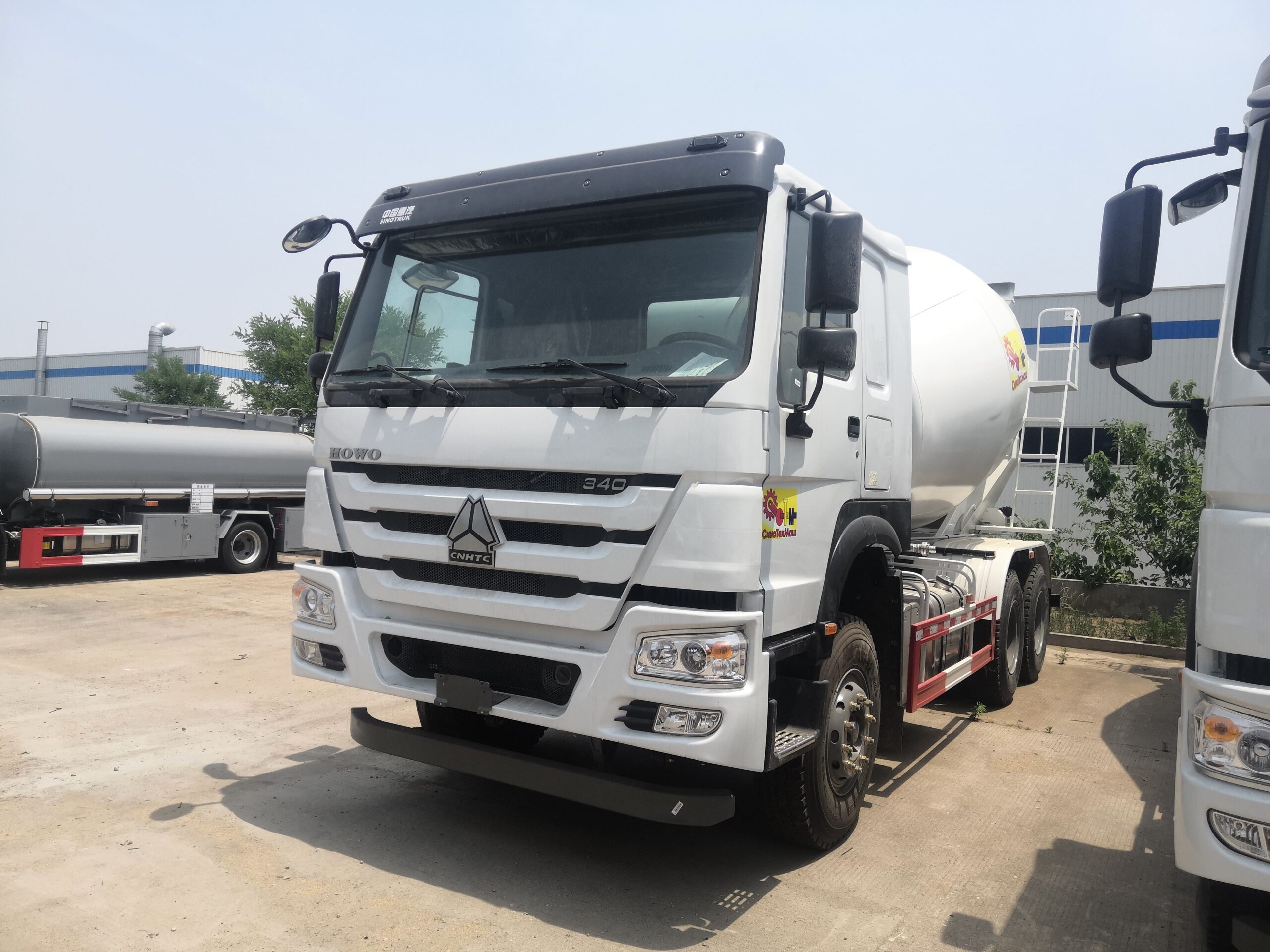
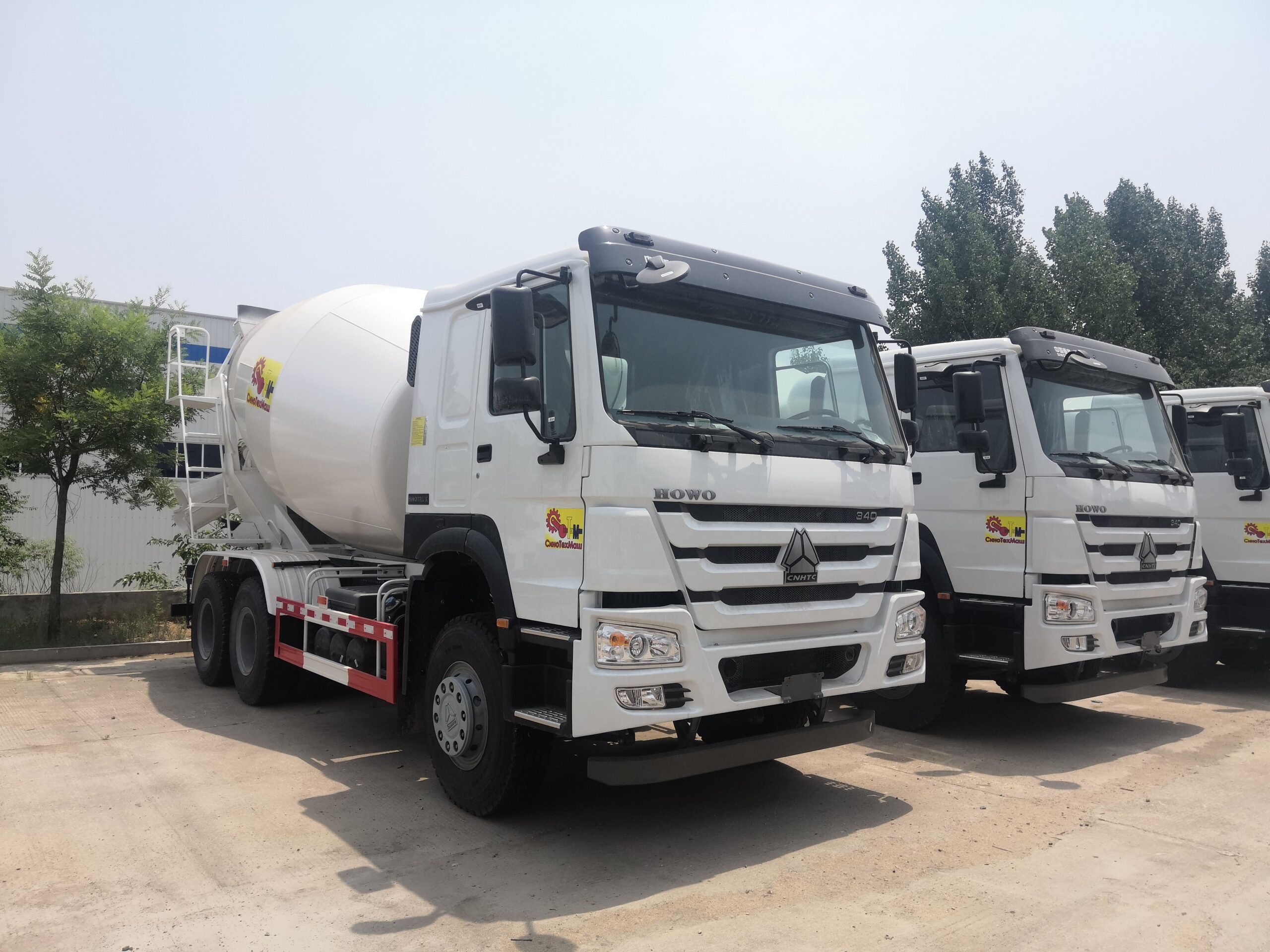
The parameter table of a mixer truck often has dozens of items, but the ones that truly determine whether the truck can work and make money are concentrated in six groups.
1、 Volume: Distinguish between “geometry” and “agitation”
The volume stated in the announcement is mostly geometric, but the actual stirring volume that can be installed is about 0.6~0.7. The actual installation of 5-6 cubic meters on an 8-shaped vehicle is the norm. Judging loading capacity depends on agitation volume and filling rate, not on nominal volume. The volume also needs to be matched with the chassis: a 4 × 2 chassis corresponds to 3-6 square meters, an 8 × 4 chassis corresponds to 8-12 square meters, and any larger one will touch the upper limit.
2、 Weight: curb weight determines compliance or non-compliance
This is the most important task under the normalization of governance. The curb weight of mainstream four axle models has been reduced to around 12.5 tons, and the total weight of a fully loaded 8-square vehicle can be controlled within 31 tons. New energy vehicle models require additional calculation of battery weight. Vehicles with batteries exceeding 4 tons are prone to “loss of tons”. The larger the kWh of the battery on the parameter table, the more it is necessary to calculate the actual amount that can be pulled in one trip.
3、 Mixing drum and blades: determining concrete quality
The inclination angle of the cylinder is usually about 14 °, the transport speed is 2-6 r/min for slow stirring, and the unloading speed is 8-14 r/min; **The residual rate of discharge ≤ 1% * * is a key indicator for evaluating the upper level, directly reflecting the blade helix angle and cylinder wall smoothness. The material of the blades and the grade of wear-resistant steel determine the timing of tank formation and sticking.
4、 Hydraulic and Transmission: High Risk Areas for Malfunctions
Pay attention to the brand and torque matching of the reducer, hydraulic pump, and hydraulic motor, as well as the power take-off method of the power take-off. This part is not about the larger the parameters, the better, but about the matching degree. The torque reserve of the tank body during the start and stop of nearly 20 tons of material should be sufficient.
5、 Power and energy consumption: calculate total cost instead of vehicle price
Match the horsepower and transmission gear of a diesel car; According to the battery capacity and power consumption of electric vehicles, the mainstream models consume about 1.3-1.5 kWh/km, and 282 kWh battery combined with fixed line swapping is a common solution. The final comparison is the delivery cost of each cubic meter of concrete, including procurement, energy, maintenance, attendance rate, and energy replenishment facilities.
6、 Homework passability: Can the construction site be accessed
The wheelbase and minimum turning radius determine the adaptability of narrow construction sites, the length and height of the discharge chute determine the convenience of pouring, and the climbing slope determines the traffic capacity between the material yard and the foundation pit edge. Short wheelbase small wheelbase models are often more practical than large wheelbase models in rural areas and renovation projects.